Client
BMS
Industry
Life Sciences
Services
Reduced energy consumption
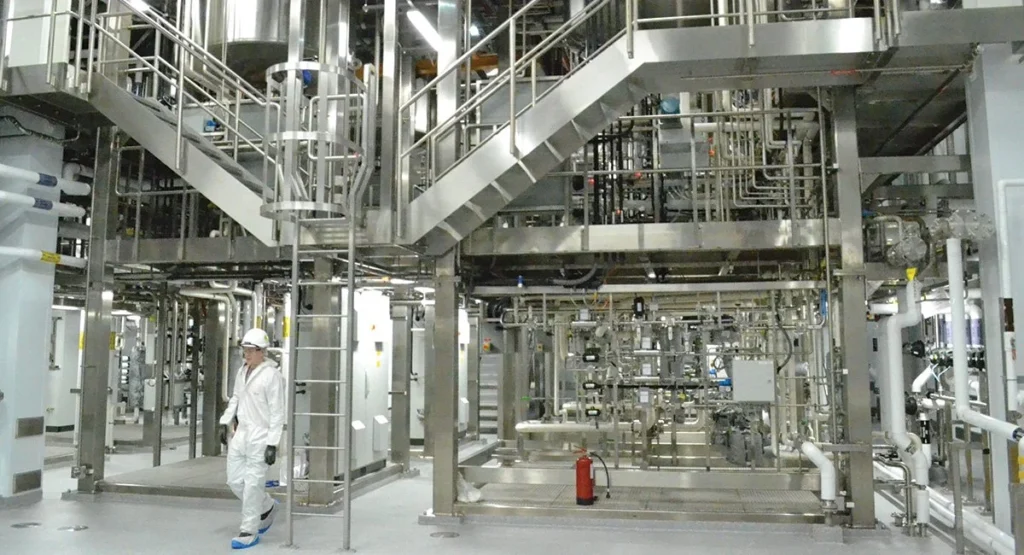
Bristol-Meyers Squibb manufactures lifesaving drugs. For that manufacturing process to happen safely and in a clean environment, all clean rooms are built to a very high grade. The clean room environment, humidity and temperature, must be controlled very carefully. The project called for a reliable and flexible variable speed drive system facilitating the accurate control of AHU units. Furthermore, downtime was not permissible, and systems could not be offline for maintenance or other reasons.If one supply or return AHU fan was taken down for maintenance or replacement, then active standby units must ramp up to achieve the process demand. This must be a reliable “bump less” transfer. The solution at Bristol Myers Squibb was to install a Dual Fan AHU system with built in redundancy.
The project was required to contribute to the Bristol Myers Squibb 2020 sustainability goal for greenhouse gas emission reduction. The 2020 Greenhouse Gas project mandates that Bristol-Meyers Squibb globally reduces emissions by 5% from 2015 baseline figures. There was a need to partner with a variable speed drives company that would not just supply VSD units in a box, but offer a comprehensive design and commissioning solution to help Bristol-Meyers Squibb achieve this corporate goal.

ACS Drives and Control Systems, supplier of ABB drives in Ireland, was identified as the perfect partner, to optimise the control functionality of the dual fan AHU system and maximize energy savings. Other critical process systems were added to their scope of supply.
In the first instance, it was essential that ACS Drives and Control Systems, in conjunction with their global partner ABB, investigate the programming power embedded in ACS Drives and Control Systems 880 series Variable Speed Drive. The VSD on board PLC control was utilised to achieve control of AHU associated external motorized dampers and to receive feedback confirmation of all damper status and field interface devices. These critical process interlocks which would otherwise be directed to the building automation system (BAS) were connected to the variable speed drive itself, thus facilitating local diagnostics and rapid fault identification on the local VSD intelligent display. These diagnostic signals were repeated at the BAS.
Bristol-Meyers Squibb assessed the VSD against a number of criteria:
How much could be fabricated at the VSD supplier workshop before the VSD units came to site
Solved for any known operational or maintenance issues from other facilities, such as the propensity of variable speed drive enclosure panel filters to become clogged or blocked and enclosure fan failures.
A design that could reduce the requirement for filters, and reduce the need for additional cooling fans by enabling natural cooling and airflow across the VSD.
With efficiency in mind, there was an additional focus on reduce VSD enclosure internal component count, so as to manage maintenance complexity and enclosure cost.
Reduction of the footprint of the VSD enclosure, with a compact design to fit neatly on the AHU, come ready made, tested and prepared to be installed on the side of the equipment.
From the outset Bristol-Meyers Squibb decided that the testing and commissioning of the VSD assemblies would be clearly defined in 2 separate phases of completion. These were “Construction phase 1”, and “CQV commissioning phase 2”.
Construction Phase 1
- This necessitated getting a variable speed drive unit that could be taken out of box, pre tagged, mounted on prepared supports and tested for mechanical completion at construction stage. The units came to site with base parameters pre-configured, thus enabling bump testing 24 x 7 at short notice with limited support from external sources ensuring that mechanical completion was taken over the line with minimum fuss.
CQV Commissioning Phase
The CQV phase of the commissioning element included process validation and the involvement of Bristol-Meyers Squibb engineering and production disciplines not involved in the construction phase. Furthermore, this phase included final setting of all relevant protections, limits, power ride through, black start, digital communications and energy optimization parameters. This ensured the most reliable matchup between VSD configuration and process demand.
The Bristol-Meyers Squibb Cruiserath project was seen in the pharmaceutical world and the wider engineering world in Ireland, as a very large scale project. ACS Drives and Control Systems were privileged to tender and then win this prestigious contract. Meeting the project requirements demanded close cooperation from the start in design phase, installation phase, and commissioning phase which ensured that project milestones were met, the electrical contractors reached their hand over phase with the minimum amount of fuss and then the final CQV commissioning was done in the shortest possible time.
The Design Phase
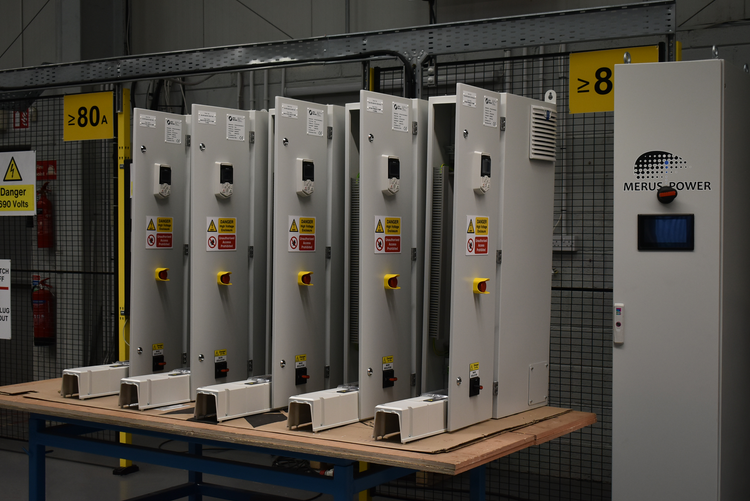
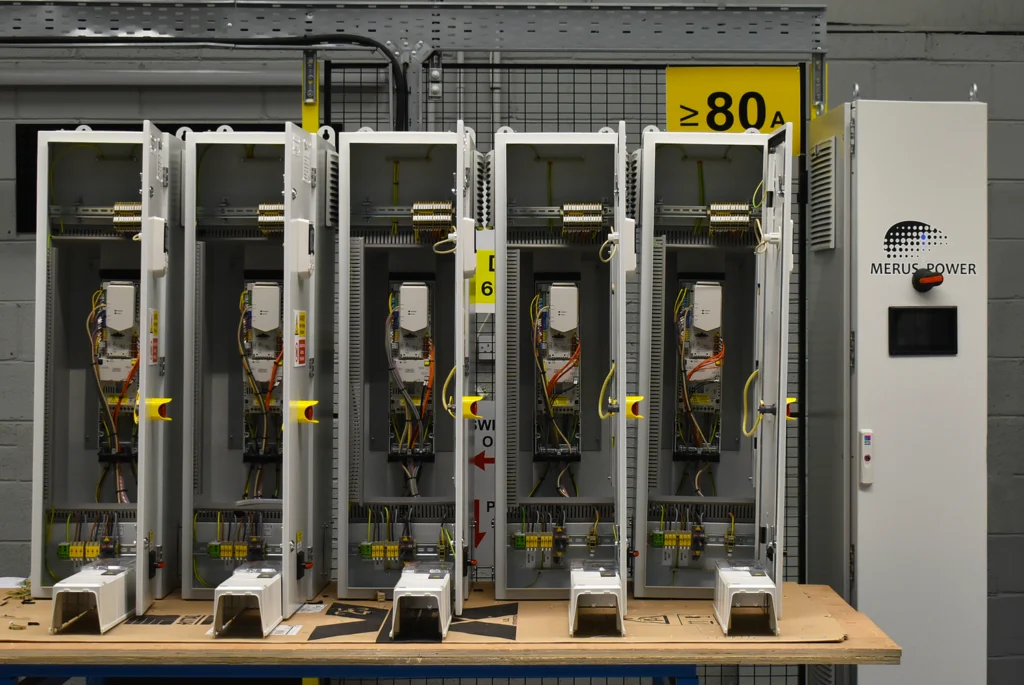
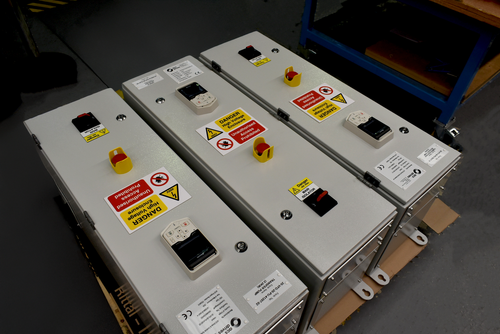
The design of the typical VSD enclosure was radically enhanced and the unique ACS Drives and Control Systems SlimBOX was installed. It’s compact design, aluminium glanding plates, no panel fans and filters with integrated airflow duct system, SIL rated safety functions, integrated E.Stop and local isolation, segregation of power and control wiring, external panel mounting lugs, symmetrical motor cable dedicated earth terminations, client specific cable termination sizes for power and control, IP 55 module inside, IP2x terminals and top or bottom entry are just a few of the standard enclosure upgrades. To further reduce MCC size, the VSD and associated controls were taken out of the main supply switchboard (MCC) and fitted in the SlimBOX.
When compared to a traditional, standard enclosure there are radical differences in the format of the VSD enclosure. Traditionally, the variable speed drive is “shoehorned” into the cabinet with clearances above the drive and below the drive which are usually outside of manufacturers recommendation.
This creates the need for additional equipment adjacent to the VSD enclosure, absorbing a lot of additional space.
The SlimBOX is designed to maximize compliance with EMC directives. ACS Drives and Control Systems achieve this by installing aluminium gland plates to ensure 360 degree grounding on all cable entry positions, both top and bottom.
A further enhancement of ensuring that the drive was mounted close to the actual air handler meant that screened cable runs between the VSD and the motor were short, reducing the phenomenon of voltage reflection, common mode voltage levels, risk to bearings from ESD and complying with the VSD manufacturer maximum cable length requirement for EMC purpose.
Traditionally there would be a normal air inlet louvre and outlet forced ventilation fan mounted on the enclosure. The SlimBOX removed the need for an air inlet louvre and outlet fan with associated control accessories such as control transformer, fusing and control thermostat.
The SlimBOX VSD enclosure makes installation, maintenance and diagnostics easy, and enhances the contractor’s ability to achieve an EMC compliant installation.